SELECTED ENGINEERING / 2026

From tool selection
to work delivered.

AI Agent Engineering

Agent tool execution, internal workflow automation, evidence-aware evaluation and release validation. Four projects connect concrete problems to engineering decisions and inspectable implementation.

Explore the cases ↓
OrchestrationMCPAI APIMLOps

01 / SELECTED CASES

What I built, and why it changed.

01 / AGENT + MCP

Terracotta

Product design · UI · agent/API implementation · deployment

Public source · personal prototype
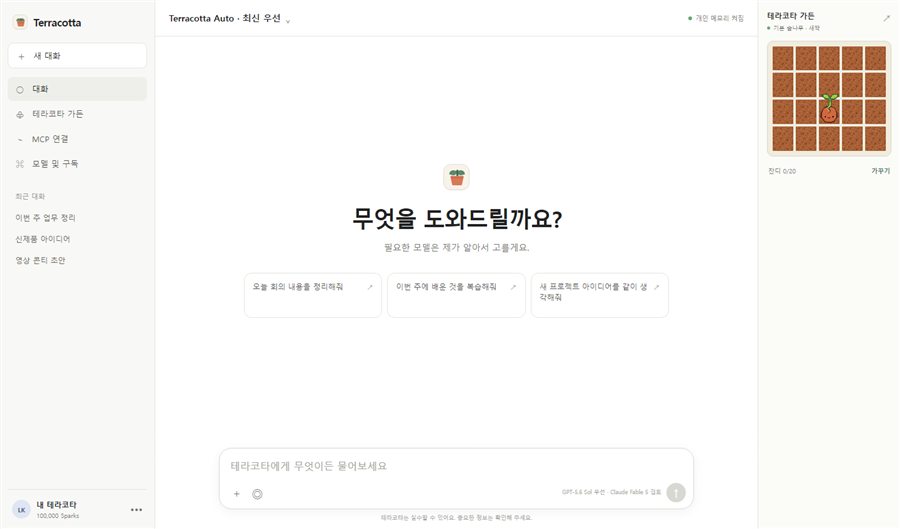
Terracotta project interface
  1. Model routing
  2. Tool loop
  3. MCP / approval
  4. Result + trace

Problem

Switching between models and work tools fragments task context, execution permissions and cost accounting.

Design and changes

Implemented provider-specific tool loops and MCP connections. The agent path waits for approval on write tools, limits rounds and calls, and stores execution traces and usage.

Evidence

Published MCP initialize → tools/list → tools/call code, OAuth PKCE and token encryption, D1 persistence, and Docker/GHCR publication history.

Scope

An HTTP implementation targeting MCP 2025-11-25. Compatibility across services, approval enforcement at every API entry point, and A2A are not verified. Cost benchmarks are offline policy simulations.
02 / WORKFLOW + OPERATIONS

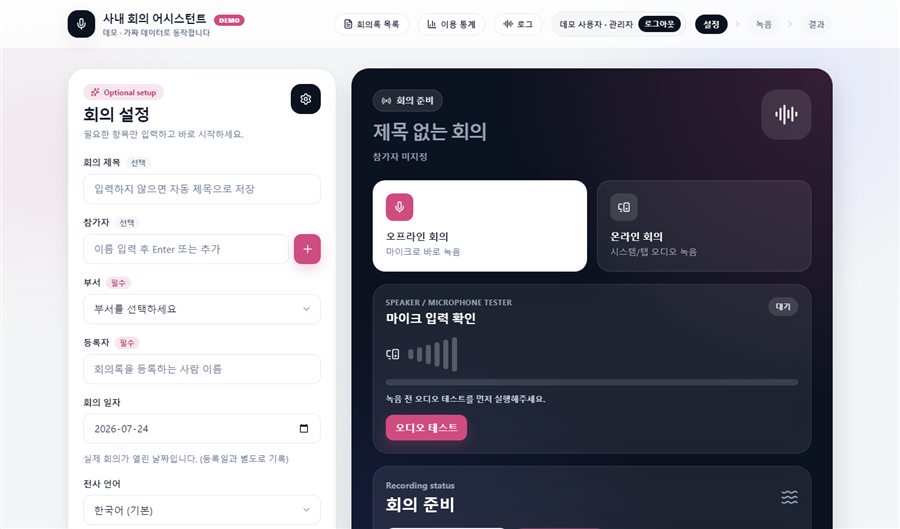
Meeting Assistant

Sole owner · planning / development / deployment / operations

Internal RTX 4090 service · public UI demo
Meeting Assistant project interface
  1. Audio + job ID
  2. STT / diarization
  3. Structured minutes
  4. Notion / email

Problem

Recording is followed by repeated transcription, speaker separation, minutes and delivery. Long audio jobs encounter request timeouts and downstream API failures.

Design and changes

Connected transcription, diarization, structured minutes and Notion/email delivery using FastAPI job IDs. The client reconnects to matching jobs after a lost upload response, while stage failures preserve transcripts and minutes.

Evidence

Supplied August–September 2026 statistics record 32 meetings and 833 minutes of audio. The case links operational requests to reconnection, retry and result-retention changes.

Scope

A fixed-stage AI workflow, not an autonomous multi-agent or MCP system. The 833 minutes are recorded duration, not time saved. Heuristic reconnection is not an idempotency guarantee.

03 / ORCHESTRATION + EVALUATION

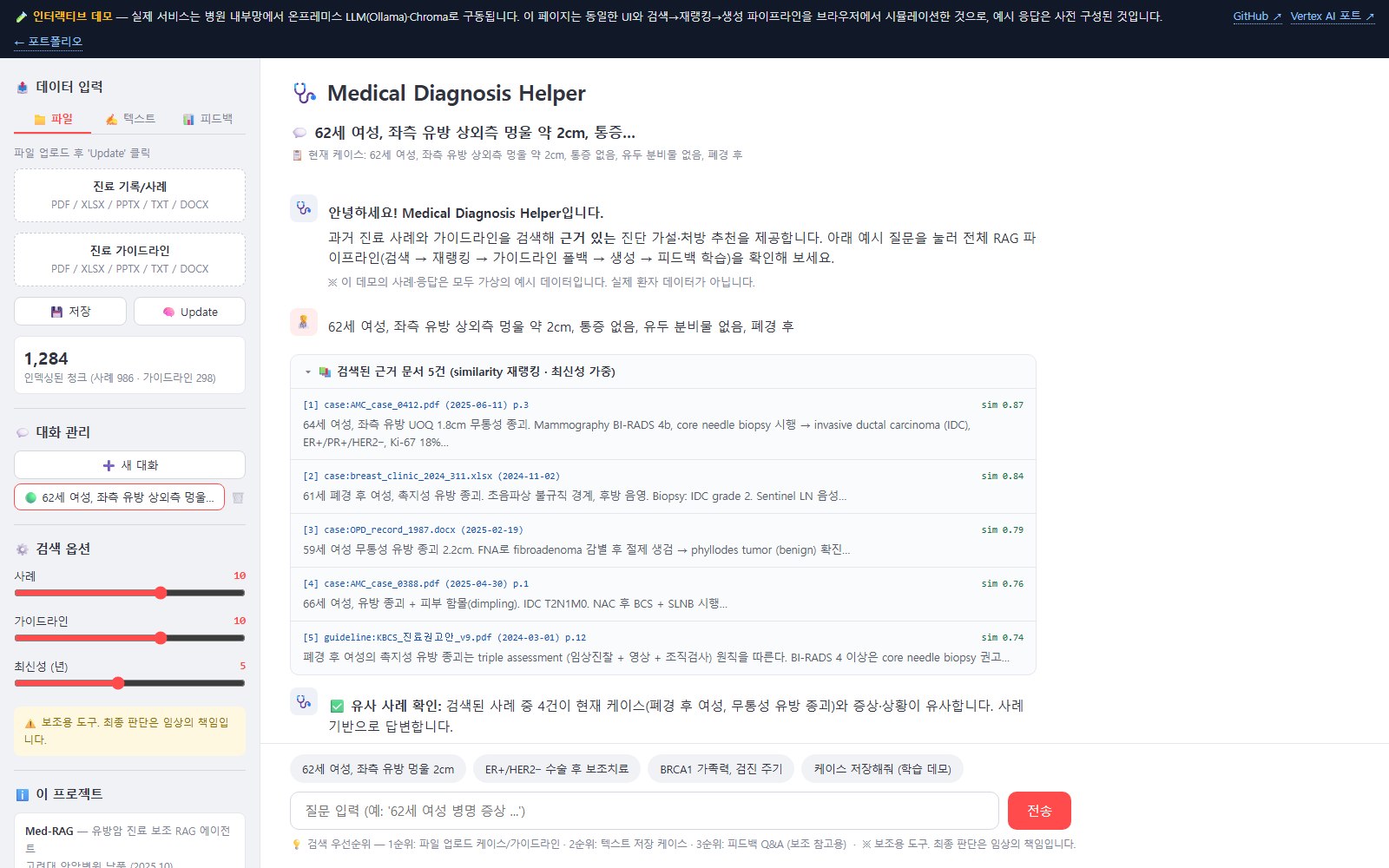
MED-RAG

RAG implementation · installation and maintenance · public evaluation

Personal-PC use · separate public ADK experiment
MED-RAG project interface
  1. Question
  2. Search tools
  3. Draft → review
  4. Evidence-aware eval

Problem

Retrieving a document and answering faithfully are different problems. Judging plausibility alone can miss retrieval failures and fabricated citations.

Design and changes

The public Vertex port uses ADK SequentialAgent for research/drafting and review. Evaluation receives retrieved evidence, and tuning comparisons inspect both fewer fabricated quotes and increased over-refusal.

Evidence

Published report: gold-document retrieval on 23/24 synthetic questions and evidence-aware answer acceptance on 20/24. Raw tuning evaluations document trade-offs supporting retention of the base model.

Scope

The in-use installation and synthetic public experiment are separate. This is a two-stage sequence; the review LLM is not a hard approval gate. Raw API logs for the RAG report are not published, and its metrics were not rerun in this audit.

04 / API + RELEASE VALIDATION

MED-RAG Serving Lab

Serving contracts · quality gates · release-artifact checks

Real HTTP · scripted CPU upstream experiment
  1. Version manifest
  2. HTTP / SSE gateway
  3. Quality + load checks
  4. Release artifact

Problem

Passing answer-quality checks does not prevent overload, broken streams or mismatched release versions.

Design and changes

Pins model, prompt, dataset and runtime versions; checks SSE gateway capacity, deadlines and readiness; and recomputes quality/performance evidence before preparing release artifacts.

Evidence

Published 14 HTTP rehearsal contracts and 31 Python tests. All six source hashes in the evidence match the code.

Scope

Actual model inference, GPU performance, production replacement and rollback are unexecuted. Separate VisionEye CPU experiments provide actual-model API and worker-recovery evidence.

02 / EVIDENCE MAP

Connect each capability to evidence.

CapabilityCurrent evidenceFurther validation
Agent design / orchestrationTerracotta tool loop · MED-RAG ADK sequenceLive-model task completion · restart/resume
MCP system integrationTerracotta HTTP tool discovery/calls · OAuthIndependent server interoperability · version negotiation · approval across entry points
AI API / performance / recoveryMeeting jobs · Serving Lab gateway · VisionEye CPU APIp95 by load · concurrency · real GPU serving
Workflow automationMeeting audio → minutes → Notion/emailStage completion rates · measured time versus manual work
MLOps / service integrationVersion pinning · quality gate · CI · release artifactsActual rollout/rollback · sustained monitoring
A2A / knowledge graphNo verified protocol/ontology implementation in the selected casesImplement when an independent agent delegation is needed

Supporting experiments

Agent Orchestra adds structural checks for parallel fan-out and rewrite loops; VisionEye adds actual-model API and worker recovery; RoboSkill adds physical-simulation failure analysis. Each distinguishes mocked, measured and unexecuted behavior.

03 / PROPOSED EXTENSION · DESIGN / NOT IMPLEMENTED

RoboSkill ExperimentOps Agent

“Find failed disturbance runs, rerun both strategies with the same seed, and produce an evidence-linked report.”

A proposed extension reusing the MuJoCo runner and viewer to automate repeated experiment discovery, reruns and analysis. It is distinct from current rule-based RoboSkill control; this agent has not been implemented or evaluated.

  1. LLM planner
  2. Persistent graph
  3. MCP experiment tools
  4. MuJoCo + evidence

First implementation

  • One orchestrator, one MCP tool service and a persistent job database
  • list_runs · start_experiment · get_run · compare_runs
  • Connect idempotency keys to run IDs; inspect and resume existing work after interruption
  • Add A2A when delegation to an independent evaluation agent is needed

Acceptance experiments

  • 40 normal, 10 ambiguous and 10 unsupported requests, separate from development
  • Target ≥90% correct artifacts on normal requests; not measured
  • Target zero duplicate experiments under worker exit, lost response and restart
  • Compare p95 latency, cost, tool errors and report figures against raw runs

Design references: MCP for tool/data connections, LangGraph persistence for resumption, and A2A for independent-agent delegation. Checkpoints and tool idempotency need separate validation.

Based on source and public-record review on 2026-09-22. This page is a role-focused reading path through existing projects, not a single integrated production system or a completion report for a new project.

Contact

hyunaeee@gmail.com ↗

South Korea · Korean / English

Portfolio PDF

A casebook with roles, engineering decisions, evidence, and source links.

Choose “Save as PDF” in the print dialog.